Arthur writes:
Figuring out who we are can be as difficult as it is obvious… obvious if you know where to look, how to draw it out and expand on it. I am Arthur and that’s what I do… help you to find that inner, passionate rage which is your mission... and become wholly, completely and forever unstoppable in all that you do and are, while living and beyond, by Creating and Keeping Your Stories.
Now that Arthur is going to be offering journaling classes, I was spurred to check out what I could find online as far as other people teaching journaling.
I was really disappointed. I don't want to overgeneralize. I don't want to badmouth. But at least as far as my researching online, there were some slim pickings out there. It seemed that many of the videos and websites talked around what journaling is. Their advice seemed jumbled, vague, and contrived. No doubt the people who made these videos are doing things like keeping diaries, and writing their thoughts in journals, but it was for the most part different than the directed kind of journaling Arthur speaks of.
I think the reason for the lack of a solid presentation on journaling is the prevalence in American society of "moral relativism". "Moral relativism" is a fancy way of saying there is no absolute right and wrong.
Underlying Arthur's approach is the concept that there is a right and wrong. His starting point is that everyone has a "mission". And that someone, through journaling, can discover their mission. Just as a a navigator looks to the stars to orient himself and keep himself on the right course, each of us has to stay the course to fulfill our mission.
That means we have to constantly ask ourselves, "Am I on-course or off-course?" That's a very different take than that embodied by, say, Jon Stewart, which is an attitude that everything, including ourselves, is open to mocking, and the only thing that is sacred is the idea that all must have the freedom to do whatever they feel like.
To put it another way, the message of the Daily Show was your implicit mission is "do whatever you like without harming the next person. Muddling through the issues of life is what it is all about."
Jon Stewart has often made the point that his brand of comedy works well precisely because it is confined to a comedy channel. But life is not artificially constricted to the dimensions of a make-believe sound stage world. Shakespeare wrote, "All the world's a stage." We'd like to think so, but it might be said that all the world is real. Life is not a game, a show, or all fun. And someone who misses that message misses out on the pleasure of being alive, instead sleepwalking through the day.
Journaling is an opportunity to wake us up from our slumber and confront challenges, overcome them, and become, in Arthur's words, "unstoppable".
Monday, July 6, 2015

Sunday, July 5, 2015
Post No. 017 : Arthur's Email : 5775.04.18
|

Post No. 016 : Arthur's Email : 5775.04.14
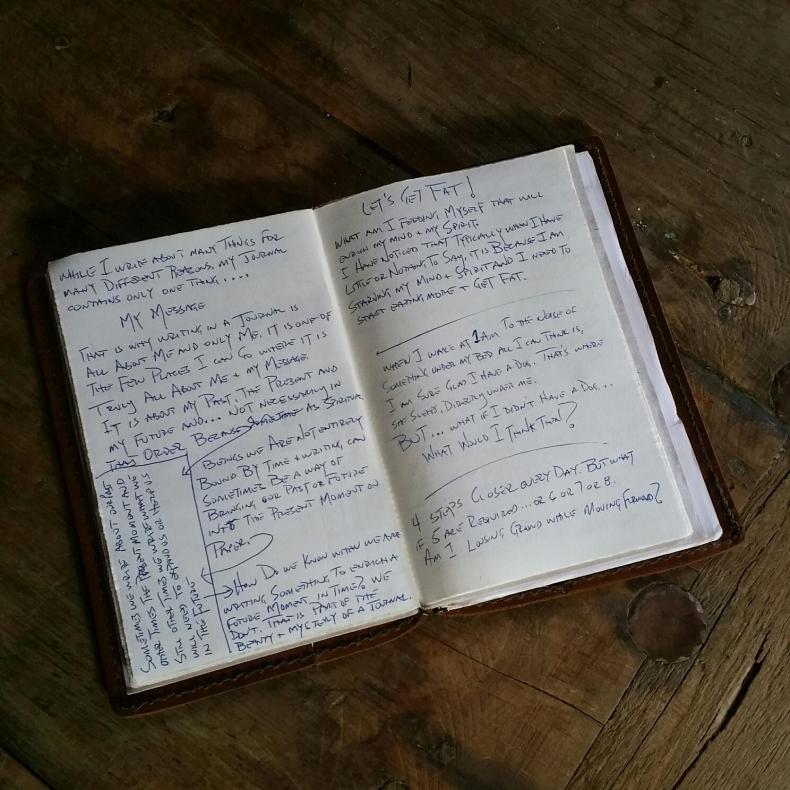
Pages from my Journal #1 :: Renaissance Art
|




Post No. 015 : Arthur's Email : 5775.04.12 : Analysis III
Journaling can be a counterweight to rambling. There are other ways than journaling to combat rambling. Speaking out one's thoughts with a friend who is willing to listen and give feedback is perhaps the best way. When a friend like that is not available, the journal is your friend. Write out your thoughts in your journal. Then review what you wrote. Listen to yourself, as Arthur says.
If someone were preparing a meal for a potential business client, should he serve the client what he made without tasting it himself? How much business will a cafe have if food is cooked, baked, and broiled, and drinks are mixed, there according to no plan? Would you eat in a restaurant that doesn't have a menu, and where the waiting staff serves without taking your order first?
A rambling man has no one to listen to him because he didn't take stock, neither of what he wanted to say or of whom his audience is. The journaling man has at least a chance of gaining the ear of others because what he says is sweet to his own ears.
Arthur has said:
----------
The reason many of us do not know what to write has to do with all of the myths about writing in a journal. It's important to remember that there are no rules. There are no rules which say we need to:
That being said, that there are no rules, I cannot give you a formula of how to use journaling to avoid rambling. Experience shows, however, that when someone writes, their writing improves. There are techniques to journaling, as a future post, with pictures of Arthur's own journal writings, will illustrate. But often those techniques develop from writing, not vice versa. The trick is to open the journal, uncap the pen, and touch the nib to the paper.
Note: I think great care must be exercised before labeling someone a "rambling man". A sure measure of a bore is someone who consistently finds others unworthy of being heard out. Many times the one who points out a flaw in his fellow is really revealing his own shortcoming.
If someone were preparing a meal for a potential business client, should he serve the client what he made without tasting it himself? How much business will a cafe have if food is cooked, baked, and broiled, and drinks are mixed, there according to no plan? Would you eat in a restaurant that doesn't have a menu, and where the waiting staff serves without taking your order first?
A rambling man has no one to listen to him because he didn't take stock, neither of what he wanted to say or of whom his audience is. The journaling man has at least a chance of gaining the ear of others because what he says is sweet to his own ears.
Arthur has said:
----------
The reason many of us do not know what to write has to do with all of the myths about writing in a journal. It's important to remember that there are no rules. There are no rules which say we need to:
- Write at a certain time of day
- Start on page 1
- Write from front to back
- Say something seemingly meaningful
- Write every day
- Write from a journaling prompt
- Etc, etc, etc
That being said, that there are no rules, I cannot give you a formula of how to use journaling to avoid rambling. Experience shows, however, that when someone writes, their writing improves. There are techniques to journaling, as a future post, with pictures of Arthur's own journal writings, will illustrate. But often those techniques develop from writing, not vice versa. The trick is to open the journal, uncap the pen, and touch the nib to the paper.
Note: I think great care must be exercised before labeling someone a "rambling man". A sure measure of a bore is someone who consistently finds others unworthy of being heard out. Many times the one who points out a flaw in his fellow is really revealing his own shortcoming.
Post No. 014 : Arthur's Email : 5775.04.12 : Analysis II
Arthur writes:
[Writing] is an act which forces us to take the time to Stop and Listen to ourselves.
And, after all, if we don't take that time to listen to ourselves, how can we expect anyone else to.
There are no shortcuts to writing, only short attention spans.
So, pick up a book and a pen and take the time to start listening to yourself so everyone else you speak to will start listening too.
Something done well can seem easy to do from the perspective a passive observer. Did you ever watch a movie and think, "Oh, I can be an actor. You just have to talk naturally." Or, did you watch someone give a speech, and have the same reaction? But the actor had a script. The speaker had a speech.
A script and a speech don't have to be written out. An improv actor does not have a written script. Someone speaking extemporaneously doesn't have a written speech. But you can be certain that they work out in advance, on some level, what they are going to say and how they will say it. If we see a table, we don't think it happened by itself. Someone had a plan, and built that table. If we watch someone perform in a movie or someone give a speech, we can infer there was a plan. The plan may have been detailed step-by-step, or it it may have been like a flowchart, with many nodes branching off. But there was a plan.
Conversely, where there's no plan, there's a rambling man.
Now here's the key point. People tend to ignore other people who ramble. I think this is the point Arthur is making.
Someone who speaks without any thought to what they are trying to say does not have a plan. Obviously, then, they do not compare what they are saying to a plan. As Arthur puts it, the person is not listening to himself.
To be sure, the rambling man's speech conforms to something. That something is whatever he happens to be feeling at that moment. This has been termed "phatic" communications. Phatic speech may express something. like an emotion. Phatic speech may provide an indication of what the person has been doing lately, or planning to do. Phatic speech can be a dumping out of what is in the forefront of a person's mind. But often the phatic speaker is almost unaware of the presence of the person they are addressing. Just as the phatic speaker does not care to speak according to a plan, he doesn't care to conform his speech to what the listener is interested in hearing.
Journaling can be a counterweight to rambling. That is the subject of the next post.
Thursday, July 2, 2015
Post No. 13 : Arthur's Email : 5775.04.15 : Analysis
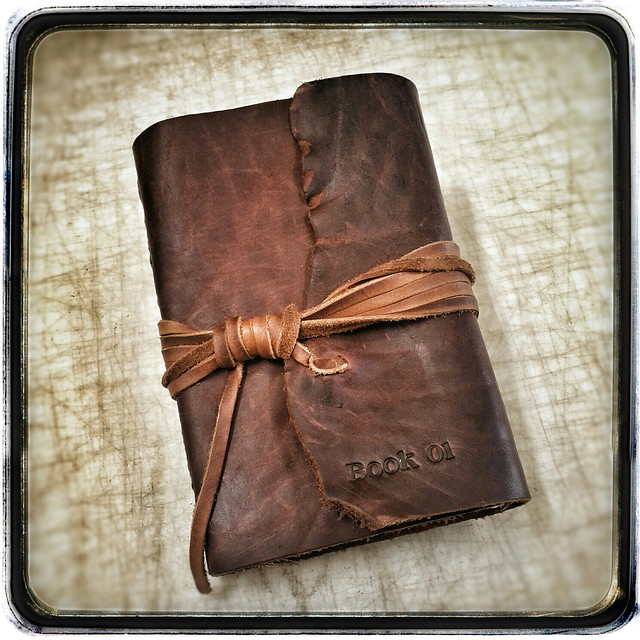
Arthur sent me this picture and asked me to evaluate the a new design for a closure. The closure is selectively cut from the edge of the hide. That means that if this kind of closure goes into production, each journal will be even more unique. I think this closure adds character, style, and security.
Post No. 12 : Arthur's Email : 5775.04.15
In a nutshell, we want to be more than just a company that sells leather books and bags. My purpose, focus and message have expanded these last few years and helping others to create, keep and expand their story and message has become really important... important enough to not just sell stuff, but to contribute in a more meaningful way as well.
Our leather journals, photo albums, leather bags... over 200 different things in all which we make and sell will be reduced to about 30, half of which will be new items.
This is because we want to align what we make more with our focus of Helping people to Create and Keep their Stories.
Stories add significance and value to a thing and to our lives.
Our power and greatness are hidden in them.
They are the source for discovery of our Purpose, Mission and the Inspiration to walk our path.
WE... want to be a part of helping others to Create, Keep and be Inspired by their stories.
- New products are coming soon,- 3 books are in the writing, the first one titled EXPAND,- a blog with spontaneous live video interviews of what other people are writing about and their journaling practices,- a journaling course and some other things.
So while we have spent the last 17 years developing our product line, the future is going to be focused more around helping to expand the lives of others thru all aspects of Creating and Keeping their Stories.
Hope that makes sense to you.
Subscribe to:
Posts (Atom)